
Blog
How E-Liquid Manufacturing Works: From R&D to Bottling
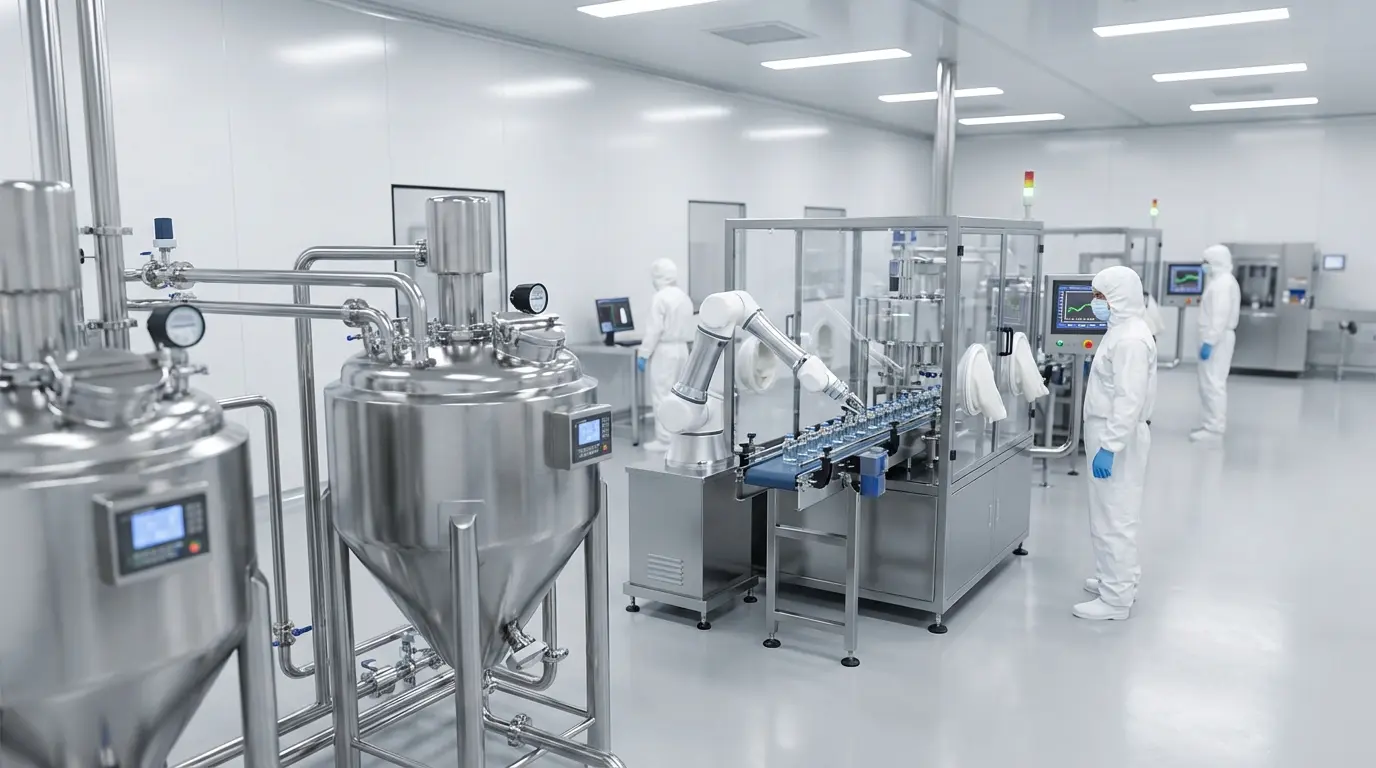
The 7-Step Manufacturing Process
Manufacturing e-liquids at a professional level is far more complex than simply mixing flavors into a base. It requires pharmaceutical-grade ingredients, cleanroom environments, precision equipment, and rigorous quality control at every stage. Here is how the process works from start to finish.
Step 1: Ingredient Sourcing
The foundation of every e-liquid is its base ingredients:
- Propylene Glycol (PG) — USP/EP pharmaceutical grade, 99.5%+ purity. PG is classified as FDA GRAS (Generally Recognized as Safe) for food use. It provides throat hit and carries flavor effectively.
- Vegetable Glycerine (VG) — USP/EP pharmaceutical grade, 99.5%+ purity. VG produces vapor density and adds sweetness.
- PG and VG together make up 80-95% of the total e-liquid volume, depending on the recipe.
- Nicotine — pharmaceutical-grade nicotine, sourced from certified suppliers with full chain-of-custody documentation.
- Flavor concentrates — food-grade flavoring compounds, individually screened for inhalation safety and TPD compliance.
Every raw material batch arrives with a Certificate of Analysis (CoA) from the supplier, and is verified against specifications before being accepted into inventory.
Step 2: Recipe Formulation (R&D)
Recipe development is where science meets creativity. Flavor chemists develop formulations by:
- Selecting and combining flavor concentrates to achieve a target taste profile
- Determining the optimal PG/VG ratio for the intended device type (higher PG for mouth-to-lung, higher VG for direct-lung)
- Calibrating nicotine strengths — typically 0, 3, 6, 12, 18, and 20 mg/mL for the EU market
- Screening every ingredient against the TPD banned substances list (diacetyl, colorings, caffeine, taurine, CMR substances)
- Conducting iterative taste testing and adjusting formulations
A single commercial recipe can go through dozens of iterations before it is approved for production.
Step 3: Mixing
Production mixing takes place in cleanroom environments using automated equipment:
- Industrial-grade mixing tanks with precise temperature and speed controls
- Automated dosing systems that measure ingredients to exact specifications
- Batch sizes ranging from small pilot runs to large-scale production batches
- Every batch is assigned a unique batch number at the point of mixing
Cleanroom environments minimize contamination risk. Workers follow strict hygiene protocols including gowning, gloving, and controlled access procedures.
Step 4: Steeping
Steeping is the maturation period after mixing, where the e-liquid develops its full flavor profile:
- Freshly mixed liquids are stored under controlled conditions (temperature, light exposure)
- The steeping period allows flavor molecules to fully integrate with the PG/VG base
- Duration varies by recipe — some flavors reach maturity in days, others require weeks
- Quality teams conduct taste checks at intervals to determine when the batch is ready
Not all recipes require extended steeping, but for complex multi-flavor profiles, this step is essential to achieving a consistent taste.
Step 5: Quality Control Testing
Before any batch moves to the filling line, it undergoes comprehensive laboratory testing:
- HPLC (High-Performance Liquid Chromatography) — verifies nicotine concentration matches the labeled strength, and screens for aldehydes (formaldehyde, acetaldehyde, diacetyl, acetyl propionyl, acetone, acrolein)
- ICP-MS (Inductively Coupled Plasma Mass Spectrometry) — tests for 10 heavy metals: copper, aluminium, nickel, iron, chromium, lead, arsenic, cadmium, mercury, and antimony
- GC-MS (Gas Chromatography-Mass Spectrometry) — impurity screening for ethylene glycol, diethylene glycol, caffeine, ethanol, methanol, and 2-propanol
For a detailed breakdown of all required tests, see our Quality Control Testing guide.
Step 6: Filling and Bottling
Filling is performed with automated bottling lines:
- Precision filling nozzles ensure exact volume in every bottle (10 mL TPD-compliant bottles for nicotine-containing liquids)
- Child-resistant and tamper-evident closures are applied mechanically
- Each bottle receives a label with: product name, ingredient list, nicotine content, batch number, production date, health warnings, and manufacturer details
- Health warnings must cover at least 30% of the two largest surfaces of the packaging
Step 7: Final Inspection and Release
Before any batch leaves the facility:
- A double-check system verifies that labels match contents, closures are properly sealed, and packaging meets all regulatory requirements
- Batch documentation is completed and archived for full traceability — every bottle can be traced back to its specific batch number and production date
- Retained samples from each batch are stored for reference and potential future testing
Quality Management Systems
Professional e-liquid manufacturing facilities operate under internationally recognized quality management systems:
ISO 9001:2015
ISO 9001:2015 is the international standard for quality management systems. Certification requires:
- Documented processes for every stage of production
- Regular internal audits and management reviews
- Third-party certification audits every 3 years by accredited auditing bodies
- Continuous improvement processes based on data and corrective actions
HACCP / GMP / GHP
In addition to ISO 9001, food-safety-aligned standards govern manufacturing hygiene:
- HACCP (Hazard Analysis and Critical Control Points) — systematic identification and control of contamination risks
- GMP (Good Manufacturing Practice) — standards for production environment, equipment, and processes
- GHP (Good Hygiene Practice) — personnel hygiene, cleaning protocols, and pest control
Batch Traceability
Every finished product carries a batch number and production date on the bottle. This enables:
- Full traceability from finished product back to raw material batches
- Rapid identification and recall capability if any issue is detected
- Compliance with TPD annual reporting requirements
References
- Hangsen — E-Liquid Manufacturing Process
- Chemnovatic — E-Liquid Production and Quality Standards
- Vampire Vape — Manufacturing and Quality Control
- ELDA Lab — Laboratory Testing Services
- Shimadzu — Analytical Solutions for E-Liquid Testing
First 5 Labs Manufacturing
First 5 Labs operates ISO 9001 and ISO 14001 certified manufacturing facilities in Zagreb, Croatia. From R&D and formulation to filling, testing, and TPD registration, we handle the entire production chain in-house. Learn about our manufacturing capabilities.